
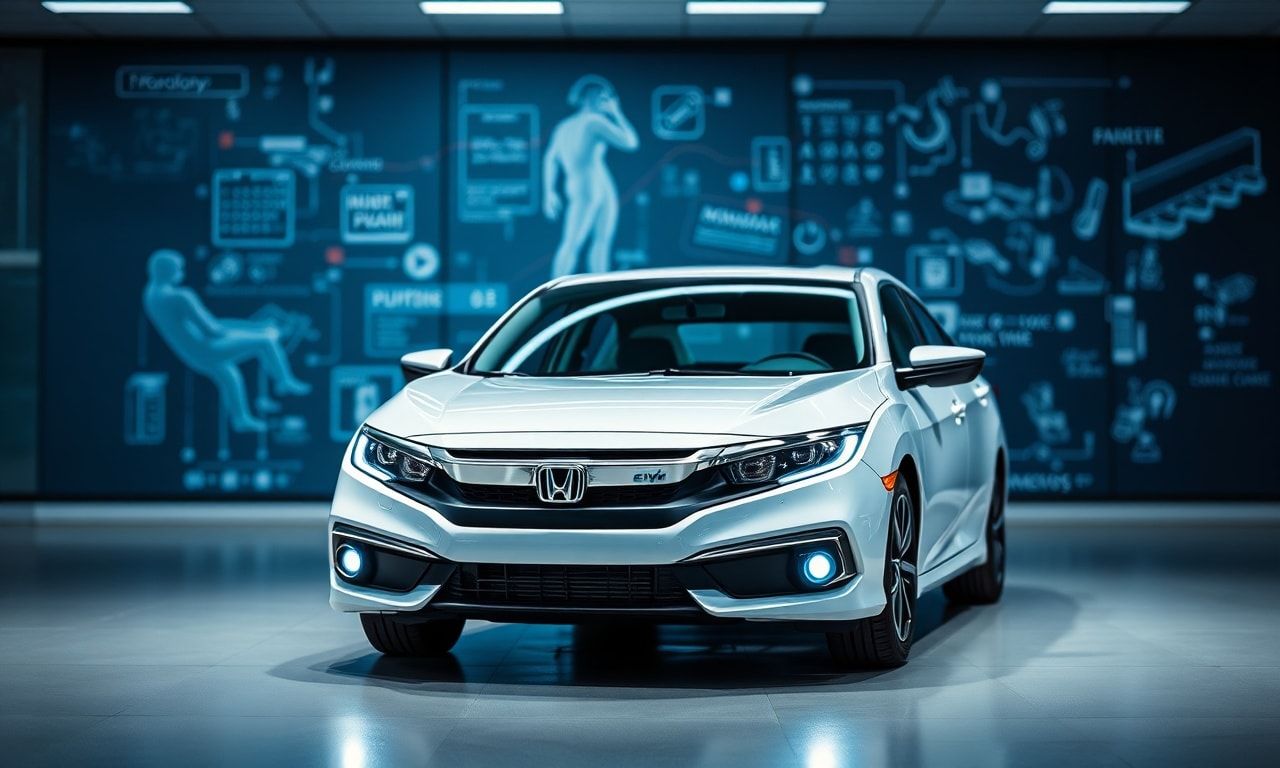
The Evolution of Honda Civic: A Technological Journey
The Honda Civic has long been a benchmark in the automotive industry, not just for its reliability and efficiency, but also for its integration of cutting-edge technology. From the early days of basic digital dashboards to the current era of advanced driver-assistance systems (ADAS) and infotainment, the Civic has consistently embraced technological innovation. This article delves into the technological advancements that have shaped the Honda Civic, highlighting how it has become a pioneer in the automotive tech sphere.
The Rise of Infotainment Systems
One of the most significant technological advancements in the Honda Civic is the evolution of its infotainment system. Early models featured basic audio systems with limited functionality. However, with the advent of smartphones and the need for seamless connectivity, Honda introduced systems like the Display Audio and the HondaLink. These systems offer features such as Apple CarPlay, Android Auto, and a host of apps that enhance the driving experience. The latest models come equipped with a 7-inch touchscreen display, providing intuitive control over navigation, entertainment, and vehicle settings.
Advanced Driver-Assistance Systems (ADAS)
Safety has always been a priority for Honda, and the Civic is no exception. The integration of Advanced Driver-Assistance Systems (ADAS) has revolutionized the way we perceive safety in vehicles. Features like Collision Mitigation Braking System (CMBS), Road Departure Mitigation System (RDM), and Adaptive Cruise Control (ACC) have become standard in many Civic models. These technologies use a combination of cameras, radar, and sensors to monitor the road and assist the driver in avoiding potential hazards. The Honda Sensing suite, which includes these features, is a testament to Honda’s commitment to leveraging technology for safer roads.
The Role of Artificial Intelligence in Modern Civics
Artificial Intelligence (AI) is transforming various industries, and the automotive sector is no exception. Honda has been at the forefront of integrating AI into its vehicles, particularly in the Civic. AI-powered systems can learn from driving patterns and adapt to the driver’s preferences, enhancing the overall driving experience. For instance, AI can optimize fuel efficiency by analyzing driving habits and suggesting improvements. Additionally, AI-driven voice recognition systems allow drivers to control various functions hands-free, reducing distractions and improving safety.
Cybersecurity in the Age of Connected Cars
As vehicles become more connected, the need for robust cybersecurity measures becomes paramount. Honda has recognized this and has implemented several cybersecurity protocols to protect the Civic from potential threats. Encryption, secure boot processes, and regular software updates are some of the measures in place to ensure that the vehicle’s systems remain secure. The integration of over-the-air (OTA) updates allows Honda to push security patches and new features directly to the vehicle, keeping it up-to-date and protected against emerging threats.
For those interested in the broader context of technological advancements, it’s worth noting that innovations in various fields often intersect. For example, the edinburgh history news updates might not seem directly related, but the principles of data security and connectivity are universal. Understanding these principles can provide a holistic view of how technology is shaping our world.
The Future of Honda Civic: What to Expect
The future of the Honda Civic looks promising, with several exciting technological advancements on the horizon. Honda is actively researching and developing autonomous driving technologies, which could revolutionize the way we commute. The integration of 5G connectivity will enable faster and more reliable communication between vehicles and infrastructure, paving the way for smarter cities. Additionally, the shift towards electric vehicles (EVs) is gaining momentum, and Honda is investing heavily in EV technology. The Civic could soon see hybrid and fully electric variants, offering zero-emission driving without compromising on performance.
In conclusion, the Honda Civic has consistently been at the forefront of technological innovation in the automotive industry. From advanced infotainment systems to AI-driven safety features and robust cybersecurity measures, the Civic continues to set new standards. As we look to the future, the integration of autonomous driving and EV technology will further cement the Civic’s position as a leader in automotive innovation.
In the realm of smart home innovations, cutting-edge cleaning solutions are transforming the way we maintain our living spaces, offering both convenience and efficiency.
