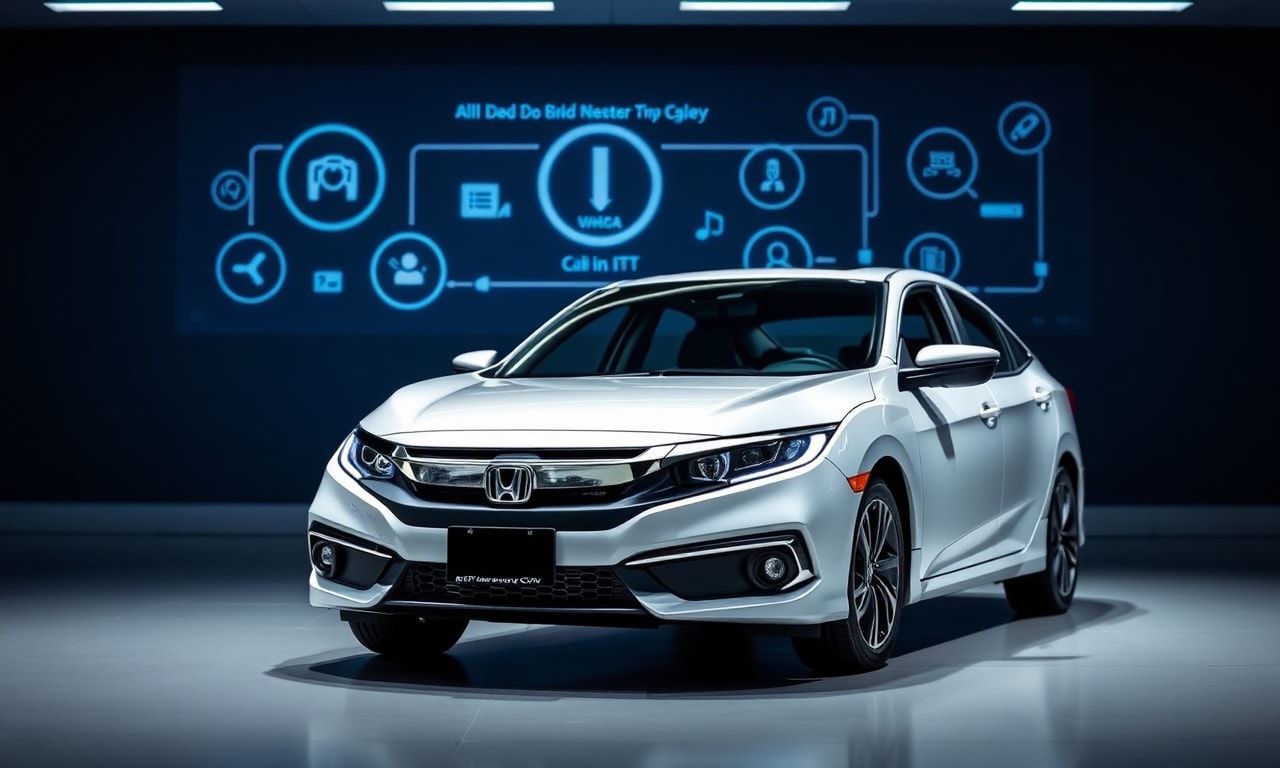
The Dawn of a New Era in Automotive Technology
The automotive industry has witnessed a remarkable transformation over the past few decades, driven by rapid advancements in technology. Among the various innovations, in-car technology has emerged as a significant game-changer, enhancing both the driving experience and vehicle safety. Honda, a pioneer in automotive innovation, has been at the forefront of this revolution, particularly with its iconic Honda Civic model. This article explores the evolution of in-car technology and how the Honda Civic is setting new benchmarks in this domain.
The Integration of AI in Modern Vehicles
Artificial Intelligence (AI) has permeated various aspects of our daily lives, and the automotive sector is no exception. Modern vehicles are increasingly incorporating AI to improve functionality, safety, and user experience. For instance, AI-powered voice assistants, such as Honda’s Display Audio system, allow drivers to control various functions hands-free, reducing distractions and enhancing safety. These systems can manage navigation, entertainment, and climate control, making the driving experience more convenient and enjoyable.
Moreover, AI is playing a crucial role in advanced driver-assistance systems (ADAS). Features like adaptive cruise control, lane-keeping assist, and automatic emergency braking rely on AI algorithms to analyze real-time data and make split-second decisions. These technologies not only improve safety but also pave the way for fully autonomous vehicles. For more useful information daily tips on AI and its applications, stay tuned to our blog.
The Role of Cybersecurity in Modern Vehicles
As vehicles become more connected, the need for robust cybersecurity measures has become paramount. Modern cars are essentially computers on wheels, equipped with numerous sensors, communication systems, and software. This interconnectedness, while beneficial, also exposes vehicles to potential cyber threats. Honda has been proactive in addressing these concerns, implementing advanced encryption and secure communication protocols in its vehicles.
For example, the Honda Civic’s infotainment system is designed with multiple layers of security to protect against unauthorized access and data breaches. Regular software updates further enhance the system’s resilience against emerging threats. Additionally, Honda’s commitment to cybersecurity extends to its over-the-air (OTA) update capabilities, ensuring that vehicles remain protected even after they leave the showroom.
The Future of In-Car Technology
The future of in-car technology is brimming with possibilities. As AI continues to evolve, we can expect even more sophisticated driver-assistance systems and fully autonomous vehicles. Honda is already making strides in this area, with its 360-degree imaging system and Honda Sensing suite of safety technologies. These innovations not only enhance safety but also provide a more immersive and personalized driving experience.
Furthermore, the integration of 5G technology promises to revolutionize in-car connectivity. With faster and more reliable internet access, vehicles will be able to communicate with each other and with infrastructure, enabling real-time traffic management and collision avoidance. Honda is actively exploring these technologies to ensure that its vehicles remain at the cutting edge of innovation.
Conclusion
The evolution of in-car technology is a testament to the rapid advancements in AI, cybersecurity, and connectivity. Honda Civic, with its innovative features and commitment to safety, is leading the way in this technological revolution. As we look to the future, the possibilities are endless, and Honda’s dedication to innovation ensures that its vehicles will continue to set new standards in the automotive industry.