
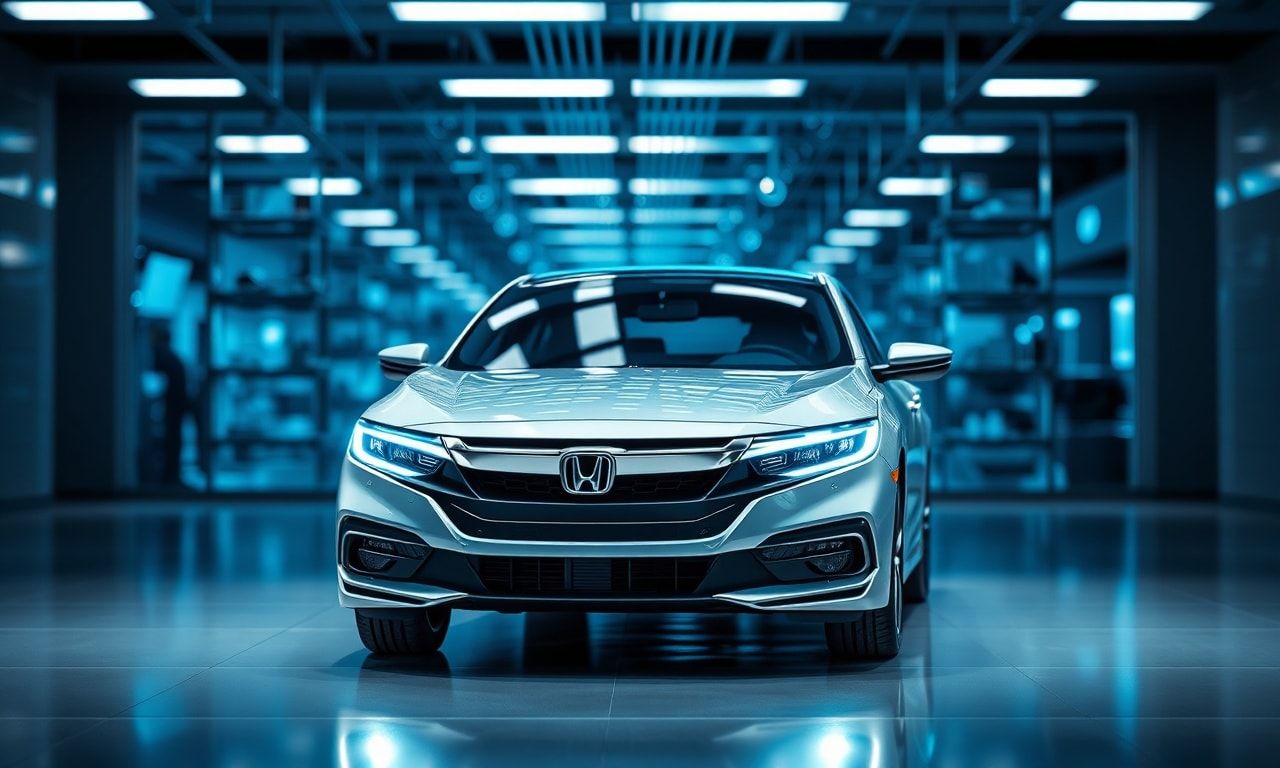
The Evolution of Honda’s Technological Innovations
The automotive industry has witnessed a significant transformation over the past few decades, with technology playing a pivotal role in this evolution. Honda, a pioneer in the automotive sector, has consistently been at the forefront of integrating cutting-edge technology into its vehicles. The Honda Civic, a popular model, exemplifies this commitment to innovation. This article delves into the technological advancements that Honda has incorporated into the Civic, focusing on artificial intelligence (AI) and cybersecurity.
The Role of Artificial Intelligence in Modern Vehicles
Artificial Intelligence has become a cornerstone of modern automotive technology. Honda has leveraged AI to enhance various aspects of the driving experience. From advanced driver-assistance systems (ADAS) to predictive maintenance, AI is revolutionizing how vehicles operate. The Honda Civic, for instance, utilizes AI-powered sensors and cameras to monitor road conditions, traffic patterns, and driver behavior. This data is processed in real-time to provide alerts and recommendations, ensuring a safer and more efficient driving experience.
AI is also instrumental in the development of autonomous driving features. Honda’s research and development teams are actively working on integrating AI algorithms that enable vehicles to navigate complex environments independently. These advancements are not only aimed at improving convenience but also at reducing the risk of accidents caused by human error. The integration of AI in the Honda Civic is a testament to the brand’s commitment to leveraging technology for a better driving experience.
Enhancing Safety with AI-Powered Systems
One of the most significant benefits of AI in the automotive industry is its ability to enhance safety. The Honda Civic is equipped with AI-powered safety features such as collision mitigation braking, lane-keeping assist, and adaptive cruise control. These systems use AI to analyze data from various sensors and make real-time decisions to prevent accidents. For example, the collision mitigation braking system can detect potential collisions and apply the brakes automatically to avoid or mitigate the impact.
Moreover, AI-powered systems can also monitor the driver’s state. Features like driver drowsiness detection use AI algorithms to analyze the driver’s facial expressions and behavior, providing alerts when fatigue is detected. This proactive approach to safety is crucial in preventing accidents caused by driver fatigue, which is a significant concern in the automotive industry.
The Importance of Cybersecurity in Connected Vehicles
As vehicles become more connected, the need for robust cybersecurity measures becomes paramount. The Honda Civic, like many modern vehicles, is equipped with various connectivity features, including Bluetooth, Wi-Fi, and cellular connectivity. While these features enhance the driving experience, they also introduce potential vulnerabilities that can be exploited by cybercriminals. Honda has recognized the importance of cybersecurity and has implemented advanced measures to protect its vehicles from cyber threats.
One of the key aspects of Honda’s cybersecurity strategy is the use of encryption to protect data transmitted between the vehicle and external systems. The Honda Civic employs advanced encryption algorithms to ensure that sensitive information, such as driver data and vehicle diagnostics, is secure. Additionally, Honda has implemented secure boot processes to prevent unauthorized access to the vehicle’s systems. These measures are crucial in protecting the vehicle and its occupants from potential cyber threats.
Protecting Vehicles from Cyber Threats
To further enhance cybersecurity, Honda has partnered with leading cybersecurity firms to develop comprehensive protection strategies. The Honda Civic is equipped with intrusion detection systems that monitor the vehicle’s network for any unusual activity. These systems can detect and mitigate potential cyber threats in real-time, ensuring the vehicle’s systems remain secure. Additionally, Honda provides regular software updates to address any vulnerabilities that may arise, keeping the vehicle’s systems up-to-date and secure.
Another critical aspect of Honda’s cybersecurity strategy is the use of secure over-the-air (OTA) updates. These updates allow Honda to remotely update the vehicle’s software, ensuring that the latest security patches and features are always available. This approach not only enhances the vehicle’s security but also improves its overall performance and functionality.
The Future of Honda’s Technological Innovations
Honda’s commitment to technological innovation is evident in its continuous efforts to integrate advanced technologies into its vehicles. The Honda Civic serves as a prime example of how AI and cybersecurity can be leveraged to enhance the driving experience. As technology continues to evolve, Honda is poised to remain at the forefront of the automotive industry, delivering vehicles that are not only technologically advanced but also safe and secure.
Looking ahead, Honda is exploring the potential of integrating AI and cybersecurity into other areas of the automotive industry. For instance, the company is researching the use of AI-powered predictive maintenance to reduce the need for manual inspections and repairs. Additionally, Honda is exploring the use of blockchain technology to enhance the security of vehicle transactions and data sharing. These innovations are set to revolutionize the automotive industry, making vehicles more efficient, secure, and user-friendly.
In conclusion, the Honda Civic exemplifies the brand’s commitment to leveraging technology to enhance the driving experience. From AI-powered safety features to advanced cybersecurity measures, Honda is paving the way for a future where vehicles are not only technologically advanced but also safe and secure. As the automotive industry continues to evolve, Honda’s innovations are set to play a crucial role in shaping the future of mobility.
For those interested in exploring the latest advancements in automotive technology, the best SUVs for off-road adventures review provides a comprehensive overview of the latest trends and innovations in the automotive industry. This review highlights the importance of integrating advanced technologies into vehicles to enhance their performance and functionality.
Discover how cutting-edge advancements are reshaping our daily routines in tech’s impact on life, our latest feature on innovations that truly matter.
In the rapidly evolving tech landscape, it’s crucial to stay informed about your legal rights; delve into your essential legal guide to navigate potential challenges effectively.
For more insights on this topic, you might find The Intersection of Technology and Fashion: particularly informative.
